Ki-gō Keikaku: The Alternate Showa Era Mecha RPG Coming to PC & Mobile
After a 10-year delay, the studio behind KanColle is finally launching an alternate Showa-era strategy game featuring fully 3D combat.

C2 Kikan (also operating as C2Architecture), the development studio behind the industry-defining mega-hit Kantai Collection, is officially developing Ki-gō Keikaku (Plan Number Ki).
This brand-new historical sci-fi strategy RPG will feature fully 3D mecha combat and is slated for release on both PC and mobile platforms.
Recommended for you
For fans of Japanese simulation RPGs, this announcement represents a massive shift.
For over a decade, C2 Kikan has dedicated its resources almost exclusively to expanding the KanColle universe.
The reveal of Ki-gō Keikaku marks the studio’s first major pivot toward an entirely original intellectual property since 2013.
But is this an April Fool’s prank? Given the original announcement timing on April 1st? Well… major Japanese gaming outlets like Famitsu (in Japanese) and Dengeki Online (in Japanese) have confirmed the project is entirely real, so…
Now, below is a comprehensive breakdown of everything we know about Ki-gō Keikaku, why it was delayed for ten years, and what it means for the tactical RPG market.
Game Overview: Ki-gō Keikaku
| Feature | Details |
|---|---|
| Title | Ki-gō Keikaku (Plan Number Ki) |
| Developer | C2 Kikan (C2Architecture) |
| Genre | Historical Sci-Fi Strategy RPG |
| Setting | Alternate Showa Era Japan |
| Core Theme | Mecha / Tactical Warfare |
| Platforms | PC, iOS, Android |
| Visual Engine | Fully 3D Graphics |
| Lead Character Designers | Konishi, Shibafu |
What is Ki-gō Keikaku? Core Gameplay and Setting
While C2 Kikan is keeping specific gameplay footage under wraps, the studio has revealed the foundational pillars of their new title.
Moving away from the browser-based 2D interfaces of their past, the studio is embracing modern gaming standards.
An Alternate Showa Era
Ki-gō Keikaku is officially described as a “historical science-fiction” game.
It takes place in an alternate version of Japan’s Showa era (a period historically spanning from 1926 to 1989).
This setting suggests a dieselpunk or retro-futuristic aesthetic.
Players can expect a blend of early 20th-century military aesthetics with advanced, anachronistic technology.
This historical grounding is familiar territory for C2 Kikan, who previously turned World War II naval vessels into the iconic “Fleet Girls.”
Fully 3D Mecha Combat
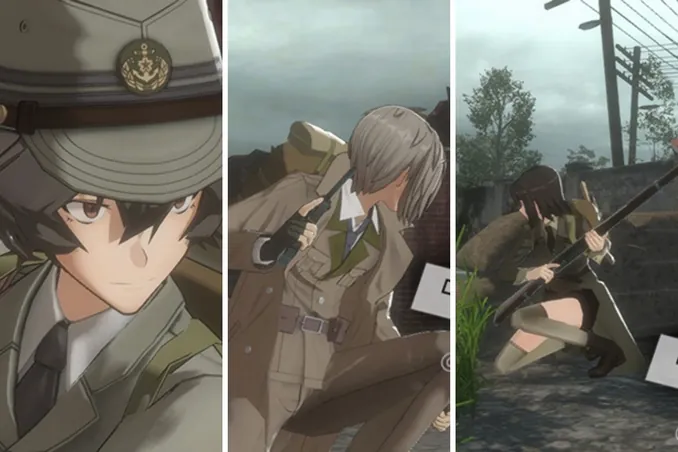
C2 Kikan has released early pre-alpha screenshots for Ki-gō Keikaku, and they provide compelling evidence of the game’s ambitious 3D direction.
The image set below showcases the transition from 2D character designs to high-detail 3D models that retain the studio’s signature artistic style while incorporating intricate, alternate-Showa military equipment.
Note: Pay close attention to the vehicle model (image 4), which validates the inclusion of detailed mechanized warfare beyond human pilots.
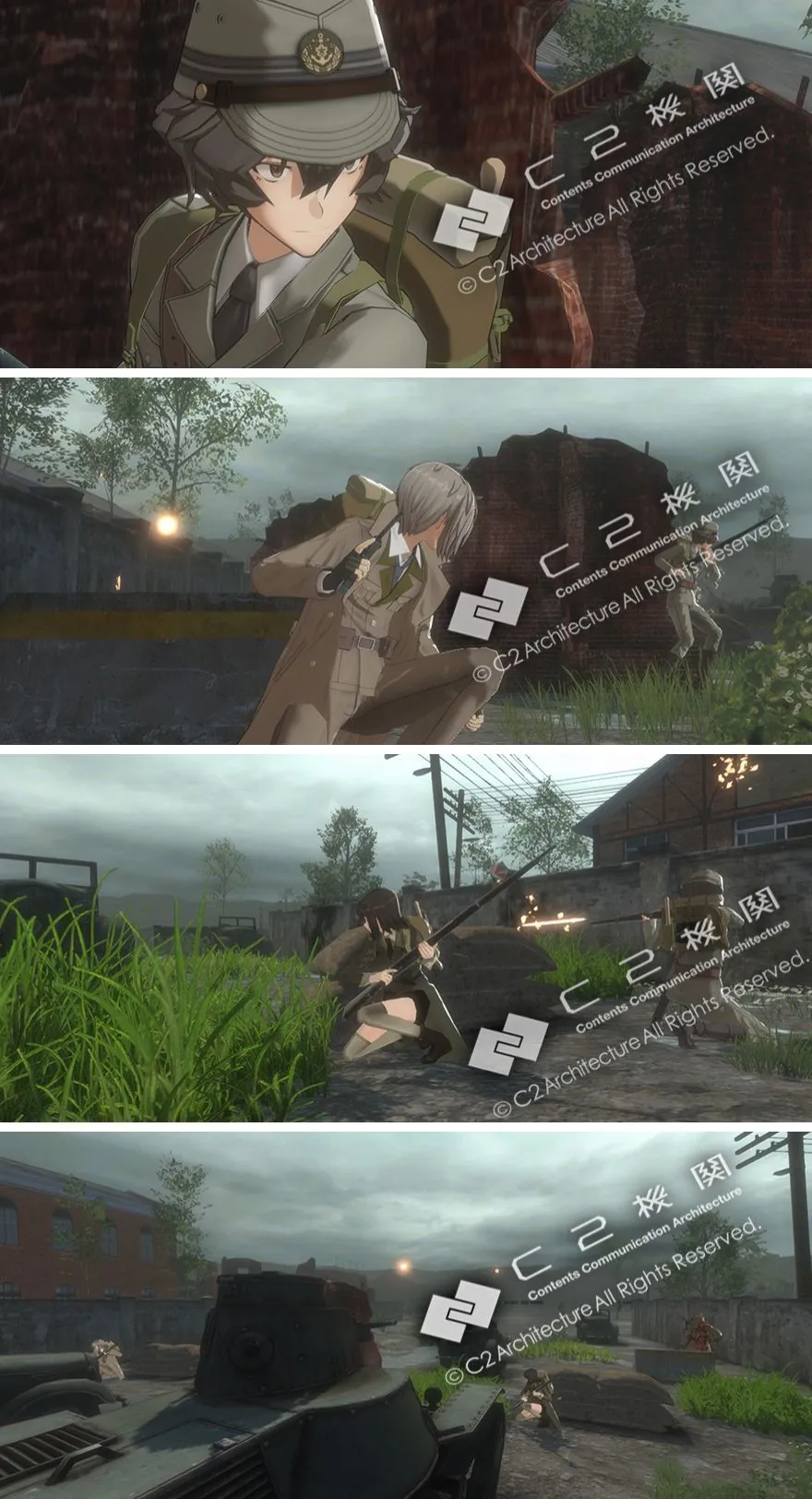
Unlike the original Kantai Collection, which relies heavily on static 2D illustrations and statistical combat, Ki-gō Keikaku will be entirely in 3D.
The game will center around mecha warfare.
We can look to KanColle Arcade, released in Japanese amusement centers in 2016, for a glimpse into C2 Kikan’s 3D capabilities.
That arcade iteration successfully transitioned 2D character designs into fully animated, 3D combat models.
It is highly likely the studio is leveraging years of 3D modeling experience from their arcade division to power this new PC and mobile title.
A New “Communication” System
The developers noted that the game features newly designed systems that “prioritize communication.”
In the context of modern mobile RPGs, this usually points to two possibilities:
- Deep Social Mechanics: Co-op modes, guild systems, or synchronous multiplayer combat where player coordination is mandatory.
- Character Bonding: Elaborate base-management systems where players interact with, upgrade, and build relationships with their pilots or mecha operators outside of combat.
The Artistic Vision (Konishi and Shibafu Return)
A game is only as good as its art direction, and C2 Kikan is bringing out their heavy hitters.
Character designs for Ki-gō Keikaku will be spearheaded by Konishi and Shibafu, two of the most recognizable and influential artists from the Kantai Collection roster.
- Konishi: Known for clean, highly detailed, and incredibly popular designs. Konishi is responsible for some of KanColle’s most iconic characters, including the Kongou-class battleships and the Shoukaku-class carriers. Their involvement guarantees mainstream appeal and highly marketable character designs.
- Shibafu: Famous in the community for a distinctly grounded, traditional, and somewhat muted art style. Shibafu prioritizes extreme historical accuracy in military equipment and uniform design.
Pairing these two artists for a historical sci-fi mecha game is a strategic move.
Shibafu can provide the gritty, historically grounded mechanical details of the Showa era, while Konishi can deliver the stylized, expressive characters needed to drive modern gacha or RPG character banners.
The 10-Year Delay (Why Was the Game Put on Hold?)
So for me, the most fascinating details from the announcement is that Ki-gō Keikaku actually predates Kantai Collection.
The concept was originally drafted as a hobby project by the team over a decade ago.
Now, why are we only seeing it now? The simple answer: Suffering from success.
When Kantai Collection launched as a web browser game in April 2013, nobody expected it to become a cultural phenomenon.
It was designed as a niche fleet-management simulator.
Instead, it single-handedly popularized the “shipgirl” subgenre, spawning a massive multimedia empire.
The sheer volume of work required to maintain that empire forced C2 Kikan to put Ki-gō Keikaku on ice.
To understand the studio’s workload over the last decade, consider the KanColle expansion timeline:
- 2013: Initial browser game launch.
- 2015: The first 12-episode TV anime series premieres (streamed globally by Crunchyroll).
- 2016: The massively successful KanColle Arcade machines launch across Japan, requiring ongoing 3D asset development and physical trading card distribution.
- 2016: The Kantai Collection -KanColle- theatrical film opens, earning roughly $5 million USD.
- 2017: Funimation releases the English dub and home video versions of the anime.
- 2022: A second anime series, Kan Colle Season 2: Let’s Meet at Sea, is produced by Studio ENGI.
With KanColle firmly established and highly stable, C2 Kikan finally gained the bandwidth to resume development on Ki-gō Keikaku.
The studio confirmed that what started as a “fun hobby” has evolved into a large-scale development project bolstered by the hiring of new team members.
Expanding the C2 Kikan Portfolio
The reveal of Ki-gō Keikaku is part of a broader expansion strategy for C2 Kikan.
According to the “upcoming projects” section of their official website (in Japanese), the studio is actively exploring multiple new intellectual properties.
They are no longer content being known as just the “shipgirl studio.” However, they aren’t abandoning their roots.
The website also teased continued expansion for their flagship franchise, including a massive non-game project: the Spring 2025 theatrical production, Kantai Collection “Operation Rei-Go 1944.”
This dual approach, maintaining their cash-cow IP while finally launching their passion project, shows a maturing studio ready to compete in a highly saturated gaming market.
Table: Comparing Eras (Kantai Collection vs. Ki-gō Keikaku)
| Feature | Kantai Collection (2013) | Ki-gō Keikaku (Upcoming) |
|---|---|---|
| Primary Theme | WWII Naval Vessels (Shipgirls) | Alternate Showa Era Mecha |
| Graphics & Presentation | 2D Static Illustrations & Sprites | Fully 3D Environments & Models |
| Core Gameplay | Fleet Management & Resource Allocation | Strategy RPG & Tactical Combat |
| Battle Mechanics | Auto-calculated RNG Battles | Interactive 3D Mecha Warfare |
| Social Features | Primarily Single-Player | New “Communication-Focused” Systems |
| Original Scope | Niche Browser Game | Large-Scale PC & Mobile Project |
Market Analysis (Competing in the Modern RPG Space)
Launching a new IP in the late 2020s is vastly different from launching a browser game in 2013.
The PC and mobile market is currently dominated by high-budget, fully 3D action and strategy RPGs from juggernauts like HoYoverse and Shift Up.
For Ki-gō Keikaku to succeed, C2 Kikan must clear several hurdles:
- Modern Monetization: The original KanColle was famous for its incredibly fair, resource-based monetization model (paying for dock space rather than character pulls). Modern gamers will be watching closely to see if Ki-gō Keikaku adopts aggressive modern gacha mechanics or retains C2’s traditional, player-friendly systems.
- Cross-Platform Optimization: Developing a fully 3D game that runs seamlessly on both PC and mobile requires rigorous optimization. The UI must translate perfectly from a mouse and keyboard to a touchscreen.
- The Mecha Niche: While the “shipgirl” genre exploded, the traditional mecha genre has historically struggled to maintain massive mainstream appeal on mobile outside of established IPs like Gundam. C2 Kikan will need to leverage their character designs heavily to pull in players who might not normally play mecha games.
Ultimately the studio’s pedigree is their greatest asset.
They possess a massive, loyal fanbase eager to see what they can do with a fully realized 3D engine and a fresh universe.
Source: C2 Kikan Official X Account.
Frequently Asked Questions (FAQ)
Is Ki-gō Keikaku an April Fool’s joke?
No. Although C2 Kikan originally posted the announcement on April 1st, major Japanese gaming publications like Famitsu and Dengeki Online have published formal reports confirming the game is a real, large-scale project currently in development.
What platforms will Ki-gō Keikaku be available on?
The game is officially confirmed to be in development for both PC and mobile devices.
What kind of game is Ki-gō Keikaku?
It is a fully 3D, historical science-fiction strategy RPG. The game is set in an alternate Showa era and features mecha combat alongside systems that prioritize player “communication.”
Who is designing the characters for the new game?
Character designs are being handled by Konishi and Shibafu, two veteran illustrators famous for their foundational work on Kantai Collection.
Will C2 Kikan stop working on Kantai Collection?
No. C2 Kikan is continuing to support KanColle alongside their new projects. They have already announced future non-game content for the franchise, including a major theatrical stage production planned for Spring 2025.
Got a tip for us? Email: [email protected]. Did you find an error in this article? Email: [email protected].
The Insect Hashira arrives as the sixth fighter in the Infinity Castle Part 1 Character Pass. Here is everything included in her new DLC pack.