Toei Launches "Kamen Rider Animated" Label With Aniplex and Shirogumi
Toei is pivoting the 55-year-old tokusatsu franchise to global anime, starting with a stylized CG film from the studios behind Demon Slayer and Godzilla Minus One.

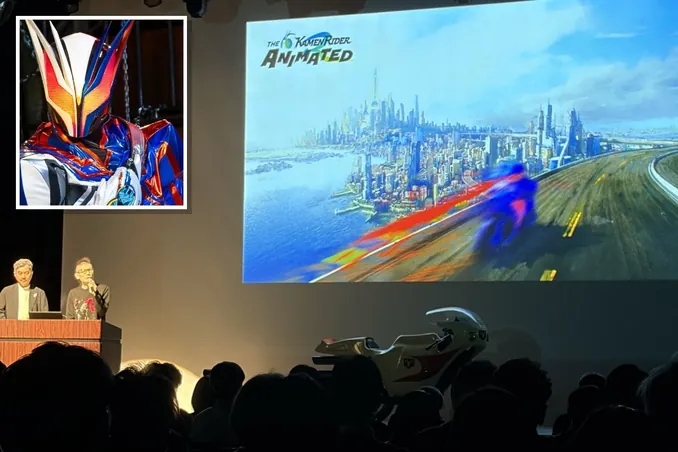
Toei has officially established “The Kamen Rider Animated,” a new production label dedicated entirely to anime feature films based on the iconic tokusatsu franchise. Announced during the property’s 55th-anniversary event in April 2026, the label’s debut project is a completely original global co-production animated by heavyweights Aniplex and Shirogumi.
This move marks a massive strategic shift for Toei. The Japanese studio is aggressively pivoting its primarily live-action superhero property toward the booming global anime market.
Recommended for you
The upcoming Aniplex and Shirogumi film will feature “graphical CG animation” and “manga-style visuals.” Toei specifically noted they are abandoning traditional, rigid 3DCG looks in favor of a stylized, comic-book aesthetic.
The project is designed to appeal to both hardcore fans and general audiences entirely unfamiliar with the 55-year history of the series.
The Aniplex and Shirogumi Partnership
To understand the scale of this announcement, American audiences need to look at the studios involved.
Toei is not handling this animation in-house.
They have contracted two of the most powerful visual studios in Japan.
- Aniplex: A subsidiary of Sony Music Entertainment Japan, Aniplex brings unmatched global distribution muscle. They are the production force behind global mega-hits like Demon Slayer and Sword Art Online.
- Shirogumi: A premier visual effects and animation studio. American audiences know them best for providing the Academy Award-winning visual effects for Godzilla Minus One, as well as high-end CG anime films like Stand By Me Doraemon.
Pairing Aniplex’s distribution pipeline with Shirogumi’s visual fidelity signals a high-budget theatrical push.
The promise of “manga-style” CG animation suggests Toei is chasing the highly successful, stylized visual trend popularized by Spider-Man: Into the Spider-Verse and Teenage Mutant Ninja Turtles: Mutant Mayhem.
This aesthetic bridges the gap between traditional 2D anime and 3D computer graphics, making it highly marketable in Western theaters.
Expanding the Live-Action Universe: Premium and Chronicle Labels
The 55th-anniversary event did not stop at animation.
Toei announced a complete restructuring of its theatrical release strategy.
Moving forward, Kamen Rider films will be divided into specific tiers to target different demographics and box office expectations.
Alongside the Animated label, Toei introduced “Kamen Rider Premium” and “Kamen Rider Chronicle.”
| Production Label | Target Audience | Content Focus | First Confirmed Release (2026) |
|---|---|---|---|
| Kamen Rider Animated | Global Anime Fans & General Audiences | Manga-style CG animation, original stories. | Untitled Aniplex/Shirogumi Film (TBA) |
| Kamen Rider Premium | International & Domestic Theatrical | Big-budget, standalone live-action blockbusters. | To Be Announced |
| Kamen Rider Chronicle | Dedicated Tokusatsu Fanbase | Legacy sequels and 20th-anniversary projects. | Agito: Chōnōryoku Sensō (April 29) |
| Traditional Theatrical | Domestic Japanese Market | Mainline crossovers and summer event films. | Kamen Rider ZEZTZ x Gavan Infinity (July 24) |
The “Kamen Rider Premium” Label
This tier is reserved exclusively for big-budget, standalone theatrical releases.
Toei explicitly stated these films are targeted at foreign markets alongside domestic Japanese theaters.
The creation of the Premium label is a direct industry response to the critical and commercial success of Hideaki Anno’s Shin Kamen Rider.
Expect these films to feature higher production values, darker tones, and standalone narratives that do not require prior viewing of weekly television broadcasts.
The “Kamen Rider Chronicle” Label
While Premium targets global newcomers, Chronicle targets the dedicated fanbase.
This label focuses entirely on sequel films and anniversary projects based on legacy Kamen Rider series.
The first slate of Chronicle films taps heavily into the beloved Heisei era:
- Agito: Chōnōryoku Sensō: The inaugural Chronicle film, scheduled to open on April 29, 2026.
- Kamen Rider Kabuto 20th Anniversary Film: Set to hit theaters on November 6, 2026.
- Kamen Rider Den-O 20th Anniversary Project: Currently in active production.
The Crossover Event: Kamen Rider ZEZTZ
Toei is also maintaining its tradition of massive crossover events.
The studio confirmed a crossover feature film pairing the upcoming Kamen Rider ZEZTZ with the Super Space Sheriff Gavan Infinity series.
This team-up film will release on July 24, 2026, acting as a major summer blockbuster for the Japanese domestic market.
New Television Series and Gaming Push
Despite the heavy focus on theatrical releases, the weekly television broadcast remains the backbone of the franchise.
Toei officially revealed the title for the next mainline television entry: Kamen Rider MY-TH.
Pronounced “Maisu,” the title strongly hints at a mythology-themed motif for the next hero.
Further details regarding the cast, suit design, and exact premiere date remain tightly under wraps, though mainline series traditionally debut in late summer or early fall.
On the digital front, Toei announced a completely new mobile app game.
Currently operating under the working title “Game Project Henshin,” the app is expected to capitalize on the lucrative gacha gaming market.
Given the franchise’s history with mobile titles like Kamen Rider City Wars, this new project will likely feature a massive roster of past and present riders.
Global Streaming Initiative: How to Watch Classic Episodes
So, normally watching legacy tokusatsu shows legally in the United States has been incredibly difficult.
Licensing issues and a lack of localization kept the franchise locked within Japan.
Toei is actively fixing this pipeline to coincide with the 55th anniversary.
They have officially relaunched the “Toei Tokusatsu World Official” YouTube channel.
This platform will serve as the primary hub for international fans to stream classic series with official English subtitles.
The channel is kicking off the initiative by streaming Kamen Rider Agito and Kamen Rider KABUTO.
The YouTube Release Schedule
Toei is utilizing a specific, time-gated release strategy for these series to drive consistent weekly engagement rather than dropping full seasons at once.
- Current Availability: The first two episodes of both Agito and Kabuto are available to stream right now.
- Weekly Drops: Episode 3 of each series will debut on April 11 (U.S. time). Moving forward, the channel will release two new episodes per week.
- The 4-Week Window: Crucial detail for fans. Each uploaded episode will only remain on the channel for four weeks before being removed.
This creates a “watch it or miss it” dynamic.
Fans need to stay current with the weekly uploads to avoid missing parts of the story.
The streams are available worldwide, specifically excluding Japan and China, directly targeting the American, European, and Latin American fanbases.
Strategic Shift: The “Marvelization” of Tokusatsu
The announcements from the 55th-anniversary event signal a massive corporate shift.
For decades, Kamen Rider operated on a simple, cyclical business model: broadcast a weekly television show to sell toys to Japanese children, and release a few low-budget tie-in movies a year.
That model is no longer sufficient for massive growth.
The domestic birth rate in Japan is shrinking, meaning fewer children are buying toys.
Meanwhile the global appetite for Japanese pop culture, specifically anime, has exploded into a multi-billion dollar international industry.
Toei is adopting a strategy that heavily mirrors Western powerhouses like Marvel and DC.
The studio is now segmenting its IP into three distinct tiers to maximize reach.
This approach offers a weekly show for the traditional fanbase, high-end anime to capture the Crunchyroll demographic, and premium theatrical films to compete with global blockbusters.
The Aniplex/Shirogumi partnership is the linchpin of this entire strategy.
If this animated feature succeeds internationally, it will prove that live-action tokusatsu properties can seamlessly transition into the anime medium, opening the door for endless adaptations of legacy storylines.
(Sources: Kamen Rider Official Website, Kamen Rider X Account.)
Frequently Asked Questions (FAQ)
What is “The Kamen Rider Animated” label?
It is a newly established film production label by Toei dedicated entirely to creating anime movies based on the Kamen Rider franchise. The goal is to produce high-quality animated features that appeal to global anime fans, starting with an original film produced by Aniplex and Shirogumi.
Where can I watch Kamen Rider with English subtitles?
You can watch official, English-subtitled episodes on the Toei Tokusatsu World Official YouTube channel. The channel is currently streaming Kamen Rider Agito and Kamen Rider Kabuto, releasing two new episodes a week.
How long do episodes stay on the Toei YouTube channel?
Each newly uploaded episode is only available for four weeks. After the four-week window closes, the episode is removed from the channel, so viewers must keep up with the weekly releases.
What is the difference between Kamen Rider Premium and Kamen Rider Chronicle?
Kamen Rider Premium focuses on big-budget, standalone theatrical films designed for international audiences (similar to Shin Kamen Rider). Kamen Rider Chronicle is dedicated to sequel films and anniversary projects featuring past heroes, such as the upcoming Kamen Rider Kabuto 20th Anniversary film.
Who is making the new Kamen Rider anime?
The first film under the new animated label is a co-production between Aniplex (known for Demon Slayer) and Shirogumi (the visual effects studio behind Godzilla Minus One). The film will feature unique manga-style CG animation.
Got a tip for us? Email: [email protected]. Did you find an error in this article? Email: [email protected].

After 266 days in theaters, the first chapter of the trilogy crossed the 100 billion yen mark globally but fell just short of Mugen Train's all-time domestic record.