My Father’s Table Webtoon Adaptation Sets September 9 Theatrical Release at Lotte Cinema Before Lezhin Snack Streaming Debut
Lee Joon-ik’s vertical short-form live-action series stars Jung Jin-young, Lee Jung-eun, and Byun Yo-han in the Korean webtoon adaptation.

A webtoon adaptation built for the vertical-video era is taking an unusual detour through movie theaters.
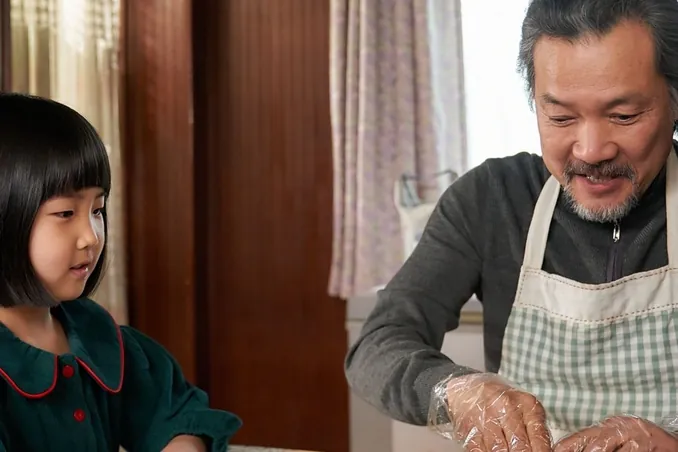
My Father’s Table, director Lee Joon-ik’s first short-form drama, will begin an exclusive theatrical run at Lotte Cinema in South Korea on September 9, 2026. The live-action family drama adapts the Lezhin Comics webtoon of the same name by Gorita, with Jung Jin-young, Lee Jung-eun, and Byun Yo-han leading the cast.
Recommended for you
Calling it a short-form series is technically accurate, although the theatrical presentation stretches the definition almost to the breaking point. The project was designed as 61 roughly two-minute vertical episodes, which are combined into a feature-length presentation for cinemas. Recent Korean press coverage lists the complete version at approximately 156 minutes.
That makes My Father’s Table a rather curious media experiment: content designed for a phone screen, assembled into a two-and-a-half-hour movie and projected vertically inside a theater. Cinema has certainly taken stranger turns.
What Is My Father’s Table About?
At the center of the story is Ha-eung, played by Jung Jin-young.
For decades, Ha-eung has expected his wife to provide home-cooked meals three times a day. He has spent around 40 years comfortably occupying the receiving end of that arrangement while Sun-ae, played by Lee Jung-eun, handles the kitchen.
Their routine collapses when Sun-ae suddenly loses her ability to remember how to cook. Ha-eung, a man who has essentially treated the kitchen as foreign territory, is forced to prepare meals himself for the first time.
The setup gives the adaptation plenty of room for comedy, but the story also examines something considerably less cute: the invisible domestic work people can spend decades taking for granted.
Ha-eung starts from a position of entitlement. Cooking gradually forces him to understand the labor and emotional effort hidden behind something as ordinary as dinner appearing on the table every day.
The original Lezhin Comics series is classified as a completed family and everyday-life drama, with food serving as the mechanism through which the characters reconsider marriage, responsibility, gratitude, and aging.
Jung Jin-young, Lee Jung-eun and Byun Yo-han Lead the Cast
Jung Jin-young plays Ha-eung, while Lee Jung-eun portrays Sun-ae. Byun Yo-han appears as their eldest son, Myeong-bok, who watches his parents’ long-established relationship begin to shift once the household routine falls apart.
The supporting cast includes Park Ji-yeon, Kang Hyung-seok, Park Jung-yoon, Park Se-joon, and Park Ji-yoon.
Jung has described Ha-eung as an intentionally familiar type of father rather than an eccentric caricature. The character represents an older model of family life in which earning money was viewed as the husband’s responsibility while domestic labor quietly became the wife’s permanent assignment.
In an interview published September 4, Jung said the production had become one of the works he regarded most highly in his career. He also argued that the vertical framing brings viewers unusually close to the actors’ expressions and emotional reactions.
That matters because the format could easily have become a gimmick. A veteran filmmaker turning a phone-shaped screen sideways, or rather refusing to turn it sideways, is not automatically interesting. The production still needs characters worth staring at in that narrow frame.
Lee Joon-ik Makes His Short-Form Drama Debut
My Father’s Table represents new territory for Lee Joon-ik, whose filmography includes The King and the Clown, Dongju: The Portrait of a Poet, The Book of Fish, and The Throne.
Lee said he wanted to bring the kind of simple, character-focused stories associated with traditional movies into short-form entertainment, including for viewers who normally have little interest in the format.
The director also had to rethink the mechanics of screenwriting.
Each small installment needed its own dramatic structure because episodes were designed to last only around two minutes. Rather than simply chopping a conventional film into dozens of pieces after shooting it, the project was conceived around short individual segments that could later function together as a longer narrative.
Lee has described the vertical frame as a way to concentrate attention on characters, particularly facial expressions and smaller emotional details. The Sept. 9 theatrical release preserves that vertical composition rather than converting the footage into a conventional widescreen presentation.
Why Is a Short-Form Series Getting a Theatrical Release?
Here is where My Father’s Table becomes more interesting than another webtoon adaptation announcement.
Vertical dramas are normally consumed on smartphones in tiny bursts between messages, social posts, and whatever else is fighting for the viewer’s thumb. My Father’s Table reverses that relationship by taking material designed around mobile viewing and placing it on a large cinema screen with theatrical sound.
The project already received its world premiere at the Bucheon International Fantastic Film Festival, where it was presented as part of BIFAN’s short-form cinema initiative. The festival described the production as an experiment in bringing vertically filmed mobile dramas into a theatrical environment.
The September 9 engagement therefore marks its commercial theatrical release, with Lotte Cinema handling the exclusive Korean run.
There is a business experiment hiding behind the creative one as well. Korea’s short-form drama market has been expanding as broadcasters, streaming companies, and production studios explore mobile-first series. Lee revealed that My Father’s Table cost approximately 500 million won, considerably more than the budget he cited for a typical Korean short-form drama.
Whether viewers actually want vertical phone dramas projected onto theater screens is another question. The industry will presumably enjoy discovering the answer with somebody else’s ticket money.
When Will My Father’s Table Stream?
Viewers who do not catch the theatrical version will not have to wait long.
Following its September 9 Lotte Cinema release, My Father’s Table will move to Lezhin Snack, the short-form drama service connected to Lezhin Comics.
The digital rollout is currently scheduled in two stages:
- September 9, 2026: Exclusive theatrical release at Lotte Cinema in South Korea
- September 17, 2026: Part 1 begins releasing on Lezhin Snack
- September 24, 2026: Part 2 arrives on Lezhin Snack
The theatrical edition presents the episodes as one continuous work, while Lezhin Snack will return the drama to the episodic short-form structure for which it was originally created.
No confirmed international streaming release has been announced in the sources available at publication time.
For webtoon adaptations, My Father’s Table is worth watching for reasons that extend past its domestic release. Korean comics have already moved freely into television, streaming, animation, and film. This project adds another route: a webtoon becoming a mobile-first vertical drama, which then becomes a theatrical feature before returning to mobile episodes.
That distribution chain sounds slightly ridiculous when written out. It may also be a useful glimpse at where adaptation strategies are heading as studios try to make one story work across increasingly different screens.
Got a tip for us? Email: [email protected]. Did you find an error in this article? Email: [email protected].
The manga legend has enough material ready to fill three graphic novels, and he is celebrating the milestone with a rare crossover sketch thanking his wife.