Dragon Ball 40th Anniversary: 7 Original Episodes That Aged Terribly (And Why)
Before Super Saiyans and multiversal tournaments, Goku was just a feral kid fighting mobster rabbits. A look back at the franchise's chaotic 1986 roots.

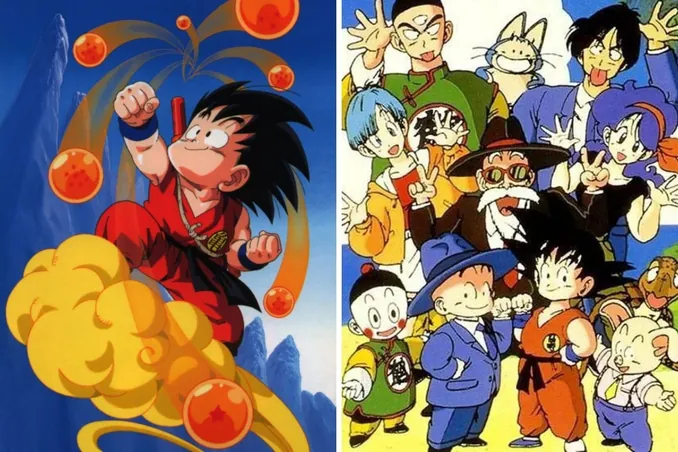
If Dragon Ball Z is the anime equivalent of a blistering, high-octane heavy metal guitar solo, all screaming, lightning, and earth-shattering power, then the very beginning of the original 1986 Dragon Ball series is a guy furiously playing a kazoo while falling down a flight of stairs.
Revisiting the original Dragon Ball anime for its 40th anniversary is a massive tonal whiplash for modern fans.
Recommended for you
Many of the earliest episodes have aged terribly simply because they are incredibly bizarre, structurally chaotic, and operate entirely on Looney Tunes cartoon logic.
Before Goku was achieving Ultra Instinct and battling multiversal gods of destruction, he was a feral cryptid breaking the fourth wall and fighting a giant anthropomorphic rabbit who turns people into carrots.
Akira Toriyama is an absolute legend, but he started his career as a “gag manga” artist. Transitioning from the purely comedic Dr. Slump into a serious martial arts epic took time.
The result? A handful of early episodes that are so deeply weird, they feel like a completely different show.
So let’s get into seven original Dragon Ball episodes that will leave modern viewers scratching their heads in pure, unfiltered bewilderment.
Table: The Original Dragon Ball “Chaos” Guide
Don’t have time to read the full breakdown? Here is a quick cheat sheet of the weirdest early episodes and exactly what makes them so unhinged today.
| Episode | Episode Title | The “Wait, What?” Moment | Chaos Rating |
|---|---|---|---|
| Episode 2 | The Emperor’s Quest | Goku treats Bulma like an alien species and completely ignores personal boundaries. | 🐾 Feral / 10 |
| Episode 9 | Boss Rabbit’s Magic Touch | Goku fights a giant mobster rabbit and literally exiles him to the moon. | 🌕 Looney Tunes / 10 |
| Episode 14 | Goku’s Rival | Earth’s future strongest human introduces himself by bribing an old man with dirty magazines. | 💸 Hustler / 10 |
| Episode 37 | Ninja Murasaki is Coming! | Goku uses his Power Pole on a ninja in a highly inappropriate, cartoonishly violent way. | 🤕 Ouch / 10 |
| Episode 67 | The End of Commander Red | A global military dictator reveals his ultimate, world-conquering wish: he just wants to be taller. | 📏 Petty / 10 |
| Episode 71 | The Invisible Man | Krillin secures a tournament victory by triggering a massive, weaponized anime nosebleed. | 🩸 Biohazard / 10 |
| Episode 82 | The Rampage of InoShikaCho | A non-canonical filler episode that brings the plot’s momentum to an agonizing, screeching halt. | 😴 Snooze / 10 |
1. Episode 2: “The Emperor’s Quest” (Goku the Feral Cryptid)
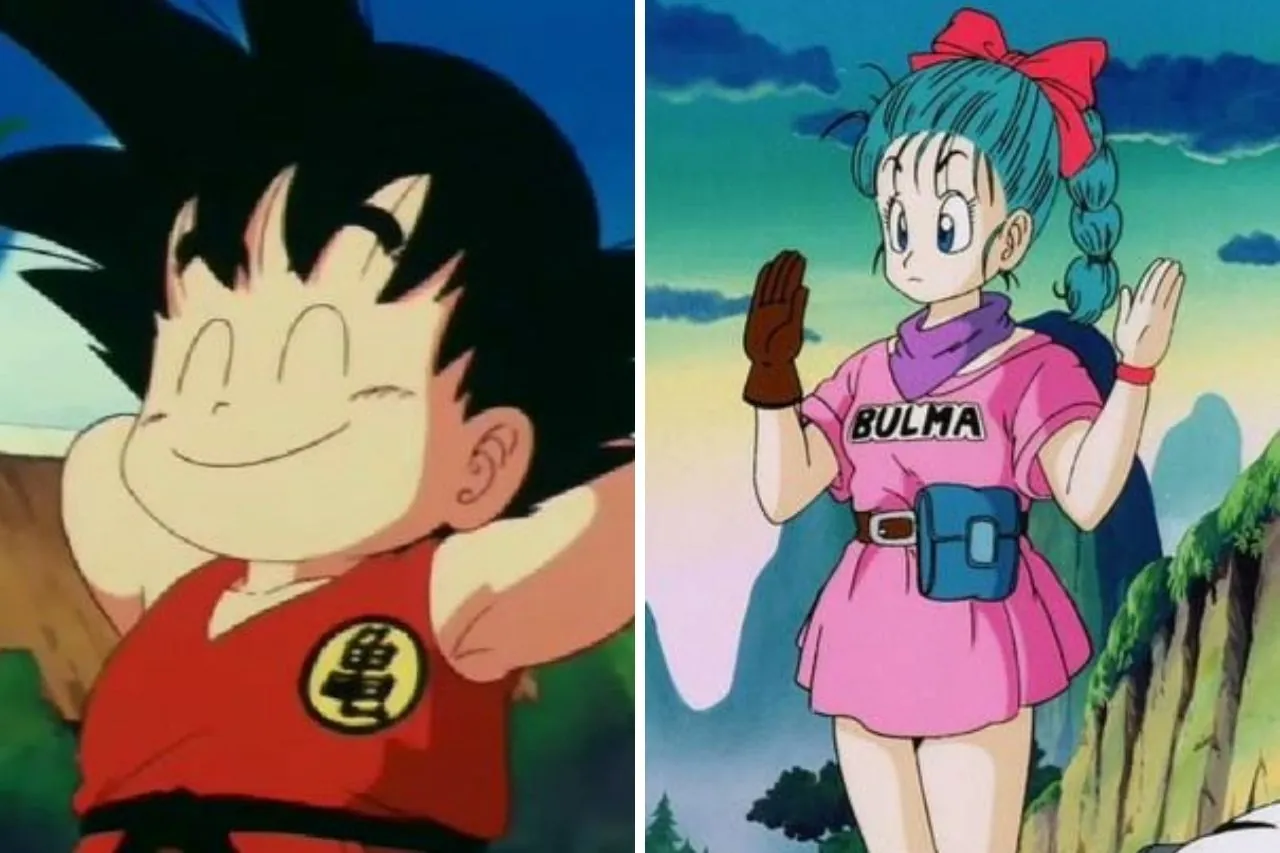
In only the second episode of the franchise, we get a front-row seat to exactly how un-socialized young Goku really is.
Having lived in the mountains his entire life with zero human contact aside from his Grandpa Gohan, Goku treats Bulma less like a human being and more like a bizarre alien species he’s trying to study.
The entire episode revolves around Goku having zero concept of basic social norms, personal space, or indoor voices.
He famously uses a completely unhinged physical method to figure out the difference between boys and girls, treating the whole situation with the blank stare of a wild animal figuring out a math problem.
- The Journey to the West Roots: This extreme, feral behavior was Toriyama leaning heavily into the original Journey to the West inspiration. Sun Wukong (the Monkey King) was a mischievous, chaotic trickster. Goku wasn’t supposed to be a superhero yet; he was supposed to be a menace.
- Viewer Retention: If you are trying to introduce a friend to Dragon Ball today, maybe warn them that Episode 2 feels like a bizarre side-quest in a retro video game before the actual plot kicks in.
2. Episode 9: “Boss Rabbit’s Magic Touch” (The Lunar Exile)
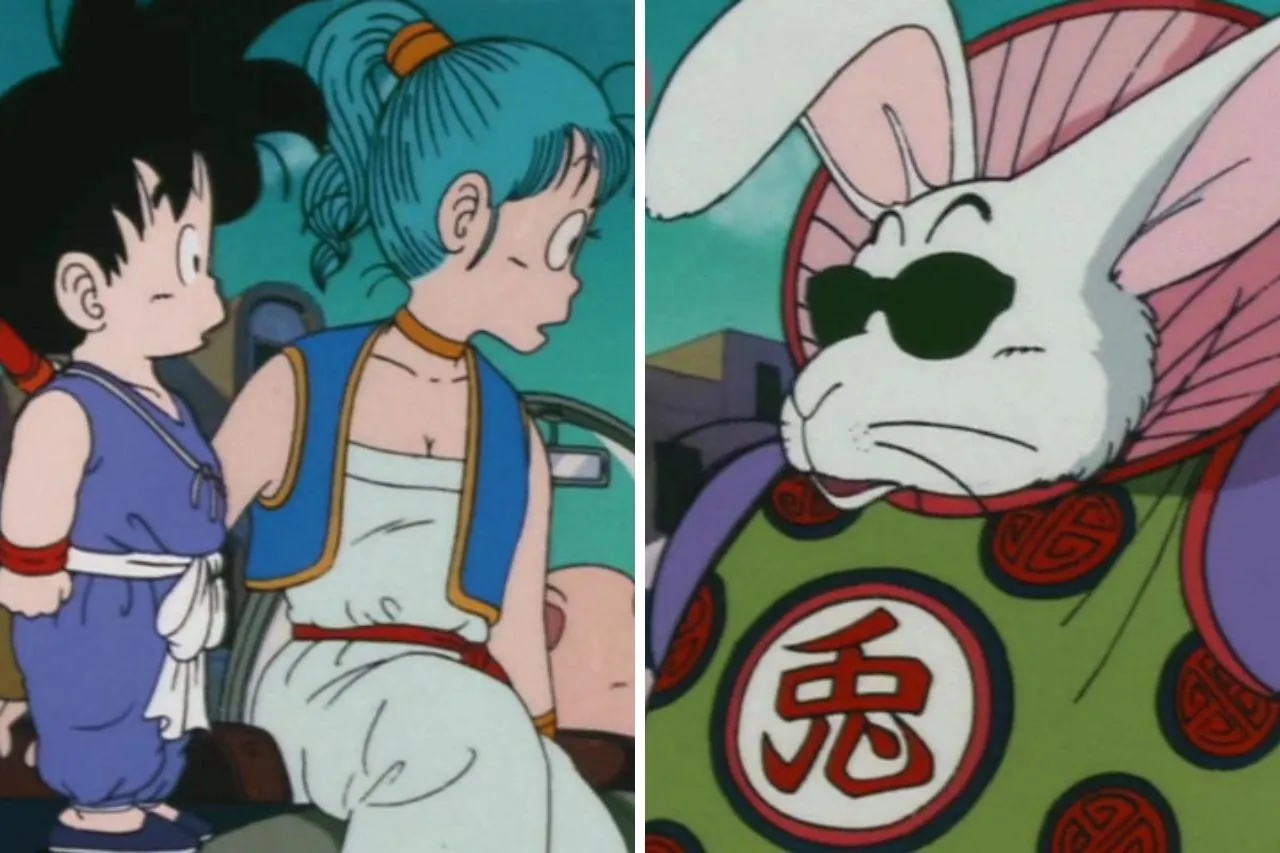
If you want to explain the tonal difference between original Dragon Ball and DBZ to a newcomer, just show them Episode 9.
The main villain is Monster Carrot, a mob boss who is also a giant, sunglass-wearing rabbit. His special power? He turns people into actual, literal carrots by touching them.
Goku defeats this organized crime syndicate not with a Spirit Bomb, but by hitting them with his Power Pole, tying them up, and then using the pole to personally drive them to the moon.
He just leaves them up there to make treats for children.
- The Plot Hole of the Century: Master Roshi famously blows up the moon during the 21st World Martial Arts Tournament just a dozen episodes later to stop Goku’s Great Ape transformation. This implies Roshi casually obliterated Boss Rabbit and his goons. Toriyama later confirmed in an interview that they survived and were just floating in space.
- The Gag Era: This episode proves that early Dragon Ball had no strict power scaling or logic. It was purely driven by whatever Toriyama thought was funniest that week.
3. Episode 14: “Goku’s Rival” (Krillin’s Bribe)
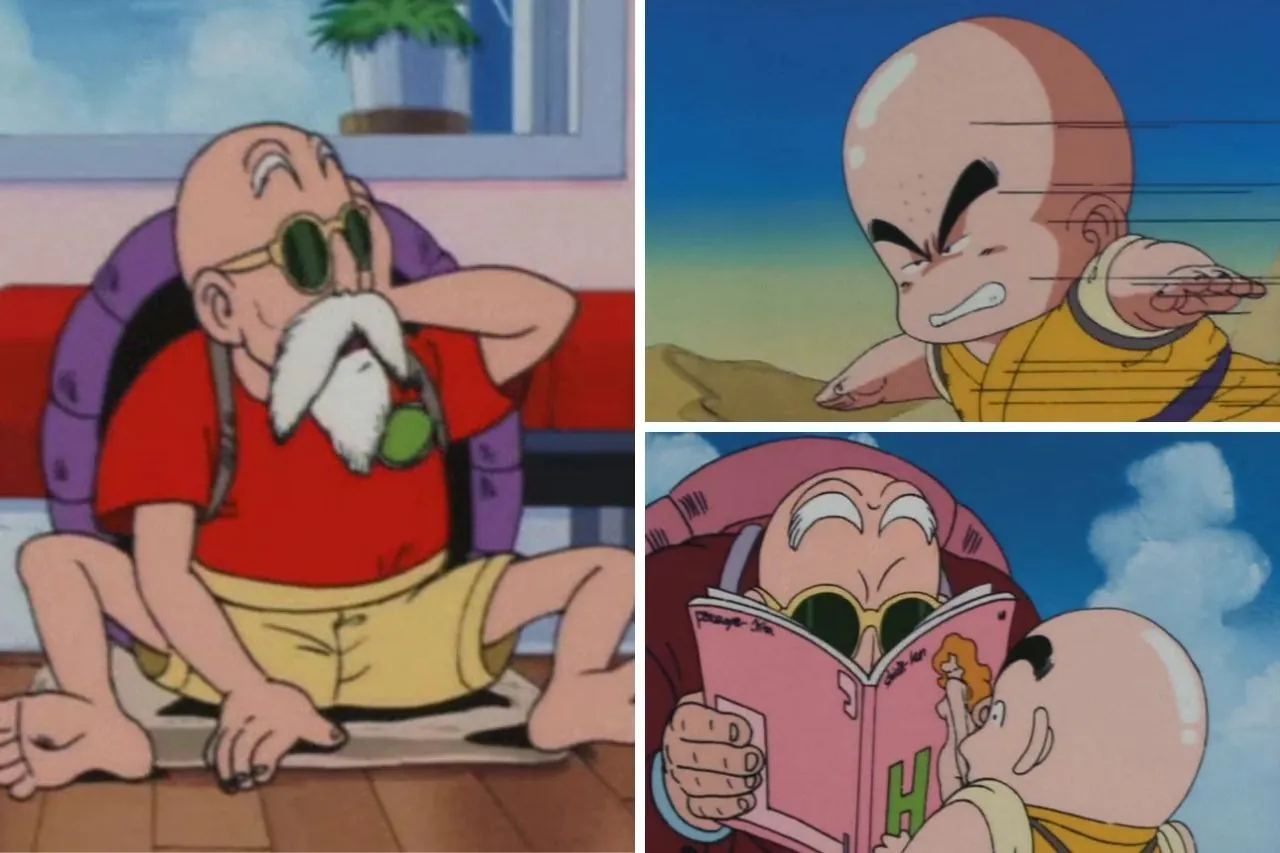
Krillin is Earth’s strongest human, a seasoned warrior who went toe-to-toe with Frieza, Cell, and the Saiyans.
But in Episode 14, his grand, epic introduction to the franchise involves him paddling a boat to Master Roshi’s island and immediately bribing the legendary martial arts master with dirty magazines.
Instead of showcasing his fighting spirit or a tragic backstory, Krillin introduces himself as a slick, opportunistic scam artist.
The fact that the legendary Turtle Hermit, a master of ancient techniques, is instantly bought off by a stack of pin-ups is a hilarious, if completely ridiculous, foundation for their dynamic.
- The Setup: Krillin was explicitly introduced because Toriyama’s editor, Kazuhiko Torishima, told him that Goku was “too bland” and needed a foil. Krillin’s sneaky, underhanded tactics were written specifically to contrast Goku’s naive honesty.
- Character Evolution: Rewatching this episode today makes Krillin’s later evolution into a dedicated husband and brave warrior one of the most drastic character arcs in anime history.
4. Episode 37: “Ninja Murasaki is Coming!” (The Muscle Tower Incident)
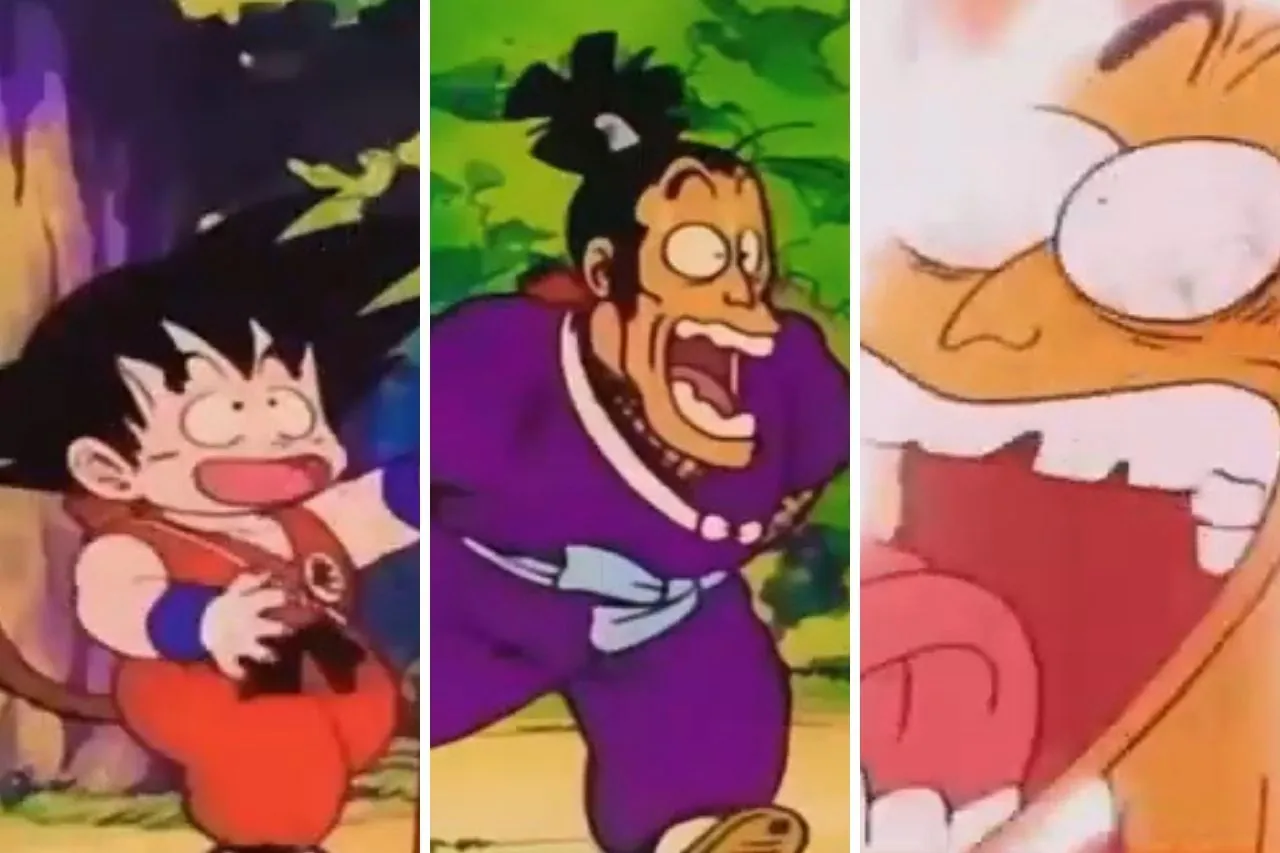
During the Muscle Tower arc of the Red Ribbon Army Saga, the show tries to blend high-stakes military action with physical comedy, and Episode 37 is where that blend violently derails.
Goku fights Ninja Murasaki, an assassin who is spectacularly bad at his job.
What follows is an extended sequence of pure slapstick violence that escalates to Goku using his Power Pole in a way that would make anyone wince.
The “impalement” physical gag drags on forever. It’s a harsh clash between the impending threat of a global terror syndicate and humor straight out of a Tom and Jerry cartoon.
- Tonal Whiplash: The Red Ribbon Army saga is historically significant because it marks the franchise’s awkward teenage phase. It was transitioning from a gag manga into a serious battle shonen, resulting in episodes that bounce wildly between intense martial arts and juvenile bathroom humor.
5. Episode 67: “The End of Commander Red” (The Height of Petty Villany)
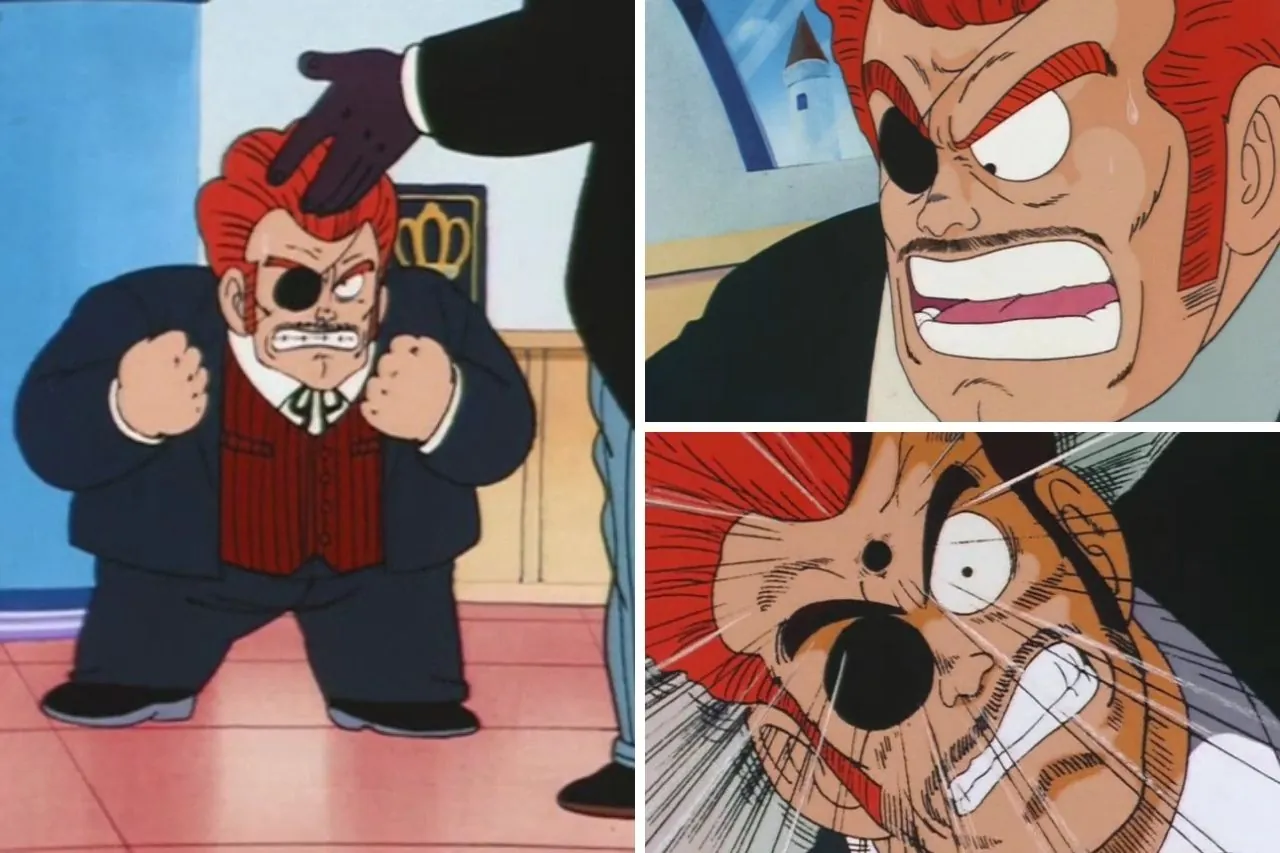
Imagine assembling a ruthless, globe-spanning military syndicate.
You hire the world’s deadliest assassin, build androids, and mobilize tanks across the planet to gather the mythical Dragon Balls.
Your army thinks you want world domination.
But in Episode 67, we discover Commander Red’s true, ultimate wish: He just wants to be taller.
When his loyal second-in-command, Staff Officer Black, finds out that thousands of soldiers died just so Red could hit a sudden growth spurt, Black is so disgusted he shoots Red in the head.
- The Ultimate Subversion: While it feels incredibly silly today, this was a masterful piece of comedy by Toriyama. Building up a terrifying, fascist military force for 30 episodes only to reveal the leader is just deeply insecure about his height is peak Dragon Ball humor.
- Why it Aged Poorly: Modern anime villains usually have complex, philosophical motivations (think Pain in Naruto or Shigaraki in My Hero Academia). Commander Red’s petty vanity feels almost completely unbelievable to today’s action-anime audiences.
6. Episode 71: “The Invisible Man” (Weaponized Biology)
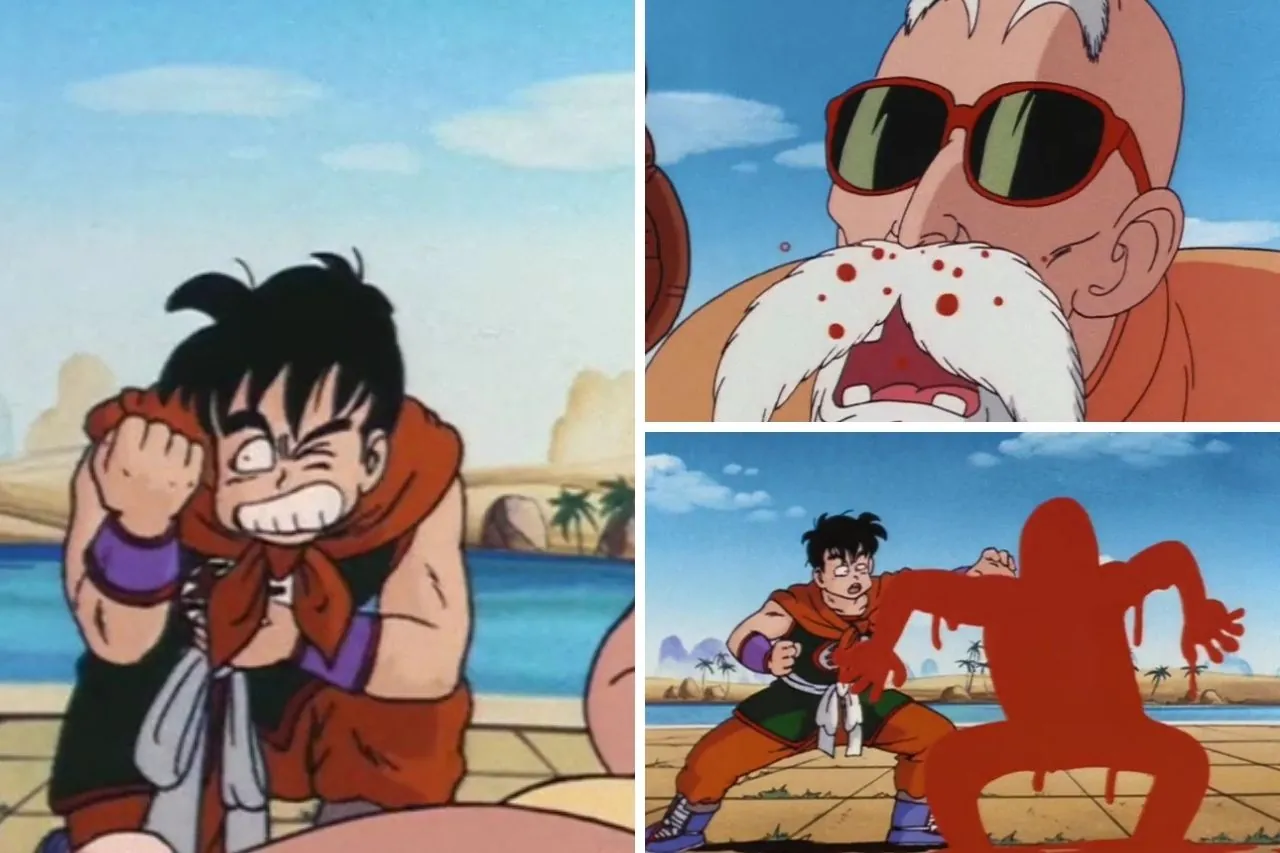
Yamcha is fighting an invisible man in Fortuneteller Baba’s tournament and is getting completely wrecked.
He cannot see his opponent. The situation is dire.
Krillin, proving once again that he is the strategic mastermind of the group, figures out a solution.
He exposes Bulma’s chest to Master Roshi. The sheer shock causes Roshi to have a massive, explosive anime nosebleed that arcs across the arena, coating the invisible man in blood and making him visible.
Yamcha wins.
- Codifying the Trope: The “nosebleed equals arousal” visual gag has been a staple in Japanese media for decades, but Dragon Ball took it to a completely absurd, tactical extreme.
- The Ridiculousness: From a modern storytelling perspective, defeating a miniboss via a weaponized bodily fluid eruption is so utterly unhinged that it circles back around to being pure cinematic art. You would never see Vegeta defeat a villain this way.
7. Episode 82: “The Rampage of InoShikaCho” (The Ultimate Filler Drag)
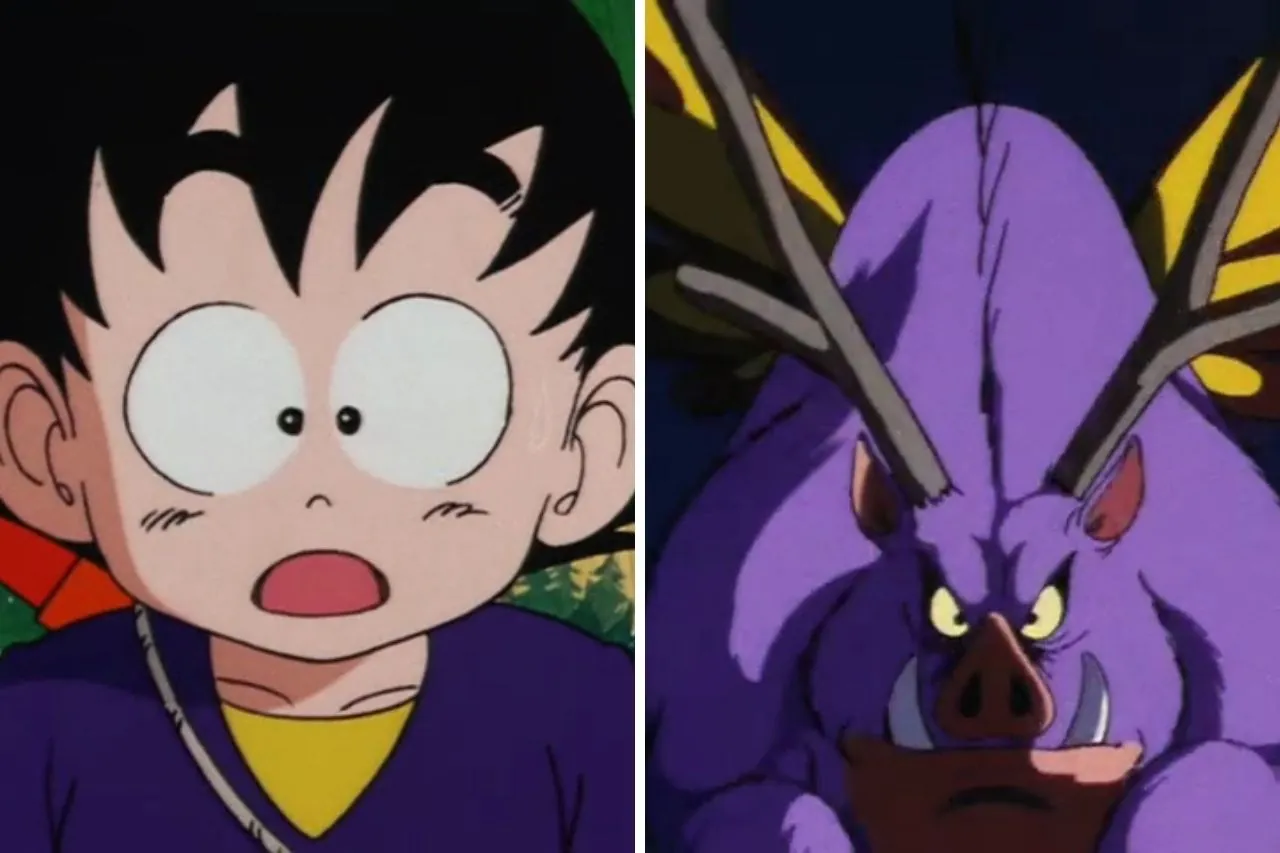
Not all episodes age poorly due to weird gags; some age terribly purely from a structural and pacing standpoint.
Episode 82 is an anime-original “filler” episode that introduces a giant boar-deer-butterfly monster.
Goku teams up with a young Tien Shinhan in a completely non-canonical adventure. From an audience retention standpoint, this episode’s bounce rate would be atrocious today.
The pacing grinds to an absolute halt, the animation takes a noticeable dip, and it adds absolutely zero value to the overarching narrative of the impending World Martial Arts Tournament.
- The Pacing Problem: In the 1980s and 90s, weekly anime needed filler to prevent the TV show from catching up to the manga publication. Today, audiences binge-watch shows and expect tight, continuous storytelling.
- The Skip Rule: If you are doing a rewatch, Episode 82 is the ultimate “skip it” material. It feels like hitting a massive speedbump right before the series truly hits the gas pedal.
Conclusion
If you go into the original Dragon Ball expecting the hyper-focused, world-shattering intensity of Dragon Ball Z or Dragon Ball Super, you are going to be thoroughly confused.
The first 80 episodes are a wild, experimental playground.
Akira Toriyama was throwing ideas at the wall to see what stuck.
Sometimes what stuck was brilliant world-building; other times, it was a giant rabbit turning people into carrots.
To appreciate the original series today, you have to embrace the chaotic, slapstick, completely unhinged energy of its roots.
It isn’t perfect, but it is never boring.
Frequently Asked Questions (FAQ)
Is the original Dragon Ball canon?
Yes, absolutely. The original Dragon Ball anime covers the first 194 chapters of Akira Toriyama’s manga. Dragon Ball Z is simply the continuation of that exact same story (starting at chapter 195). In the original manga, there is no “Z”, it is all just one long series called Dragon Ball.
Why is the tone of original Dragon Ball so different from DBZ?
Akira Toriyama started his career writing Dr. Slump, a pure gag comedy manga. When he started Dragon Ball, he carried over that comedic, slapstick style. As the series progressed and martial arts tournaments became more popular with readers, he naturally shifted the tone to be more action-oriented and serious.
What are the worst filler episodes in original Dragon Ball?
Episodes 29 through 33 (the wandering in the desert arc) and Episodes 79 through 83 (the lead-up to the 22nd World Tournament) are generally considered the most tedious filler arcs. They drag the pacing down and don’t contribute to the main storyline.
Should I skip the original Dragon Ball and just watch Z?
No! While the early episodes are incredibly weird and comedy-focused, skipping the original series means missing the foundational lore of the entire universe. You miss out on how Goku met his friends, the brilliant World Martial Arts Tournaments, and the incredible King Piccolo saga, which sets up everything that happens in DBZ.
Got a tip for us? Email: [email protected]. Did you find an error in this article? Email: [email protected].
The unprecedented 3-month hiatus is finally over. Here is exactly what to expect as the Straw Hats land on Elbaph, plus details on Prince Loki’s highly anticipated debut.